What is seo?
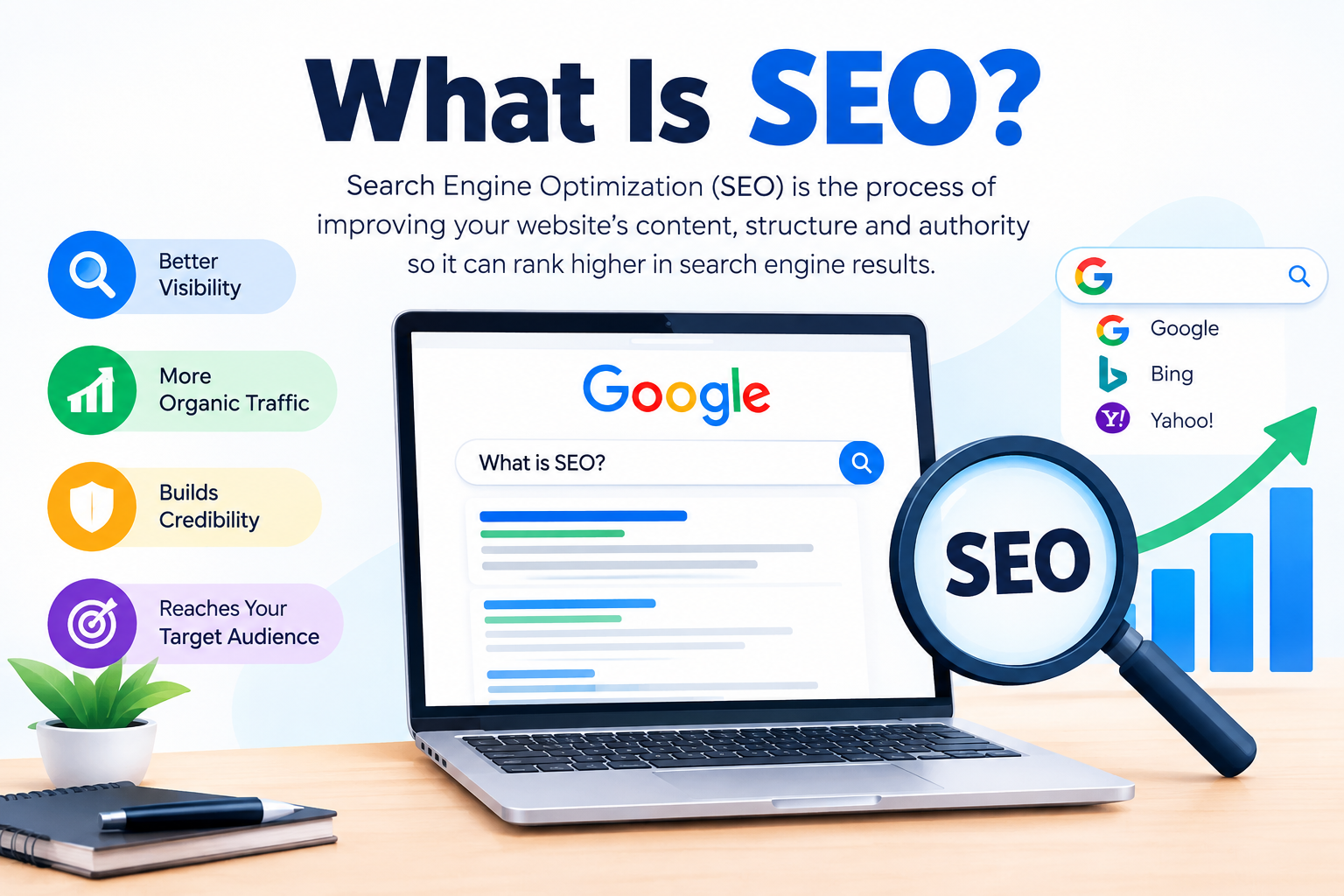
SEO stands for Search Engine Optimization. It is the process of improving a website and its content to help search engines understand the page and make it easier for people to find through organic search results. SEO is an important part of digital marketing for businesses, bloggers, and website owners.
Search Engine Optimization stands for Search Engine Optimization. It is the process of improving a website and its content so that it can appear more prominently in search engine results. Search engines such as Google use many different signals to understand webpages and decide which results to show for a particular search.
For example, if someone searches for “best digital marketing course”, hundreds or thousands of webpages may be available. Search Engine Optimization helps a website make its content easier for search engines to understand and easier for users to discover.
Search Engine Optimization is an important part of digital marketing because it can help businesses, bloggers, online stores, and organizations attract visitors from search engines without relying entirely on paid advertising.
Why Is Search Engine Optimization Important?
Most people use search engines when they want to find information, products, services, or solutions to a problem. If your website appears in relevant search results, people may visit your website and learn more about what you offer.
SEO can help a website:
- Increase organic website traffic
- Improve online visibility
- Reach people searching for relevant topics
- Build credibility and trust
- Generate leads and potential customers
- Support long-term digital marketing efforts
Unlike paid advertising, organic search traffic does not require you to pay for every individual click. However, SEO requires ongoing effort, useful content, technical improvements, and monitoring.
How Does SEO https://www.geeksforgeeks.org/blogs/how-does-seo-work/Work?
Search engines use automated systems to discover, understand, and organize webpages. These systems examine factors such as the content of a page, links between websites, page structure, technical accessibility, and how well a page matches the user’s search.
The basic process can be understood through three stages:
1. Crawling
Search engines use automated programs, often called crawlers or search engine bots, to discover webpages and follow links between them.
2. Indexing
After discovering a webpage, a search engine analyzes and stores information about it in its index when the page is eligible for indexing.
3. Ranking
When someone performs a search, the search engine evaluates relevant indexed pages and orders results according to many factors. The goal is to provide useful and relevant results for the search query.
Main Types of Search Engine Optimization
SEO can be divided into several important areas. The three commonly discussed types are On-Page SEO, Off-Page SEO, and Technical SEO.
1. On-Page Search Engine Optimization
On-Page SEO focuses on elements that are present on your website and individual webpages.
Important On-Page SEO activities include:
- Using relevant keywords naturally
- Creating useful and original content
- Writing descriptive page titles
- Creating useful meta descriptions
- Using proper headings
- Optimizing images
- Improving internal linking
- Making content easy to read
For example, if you write an article about “How to Choose the Best Laptop”, your page should clearly explain the topic and naturally use relevant terms that users might search for.
2. Off-Page SEO
Off-Page SEO focuses on activities outside your own website that can help build your website’s reputation and visibility.
One important part of Off-Page SEO is earning backlinks. A backlink is a link from another website to your website.
However, quality is more important than simply collecting a large number of links. Links from relevant and trustworthy websites can be more useful than large numbers of low-quality or irrelevant links.
Other off-page activities can include digital PR, brand mentions, and promoting useful content so that other websites and audiences can discover it.
3. Technical SEO
Technical SEO focuses on the technical aspects of a website that can affect search engine crawling, indexing, and user experience.
Important technical SEO areas include:
- Website loading performance
- Mobile usability
- Website security
- XML sitemaps
- Robots.txt
- Proper URL structure
- Redirects
- Broken links
- Structured data
- Crawlability and indexability
A website can have excellent content, but technical problems may prevent search engines from properly accessing or understanding some of its pages.
Quick Comparison of SEO Types
| SEO Type | Main Focus | Examples |
|---|---|---|
| On-Page SEO | Website content and page elements | Keywords, headings, titles, internal links |
| Off-Page SEO | External signals and website reputation | Backlinks, digital PR, brand mentions |
| Technical SEO | Website technical performance | Speed, mobile usability, sitemap, crawlability |
What Are Keywords in SEO?
Keywords are words or phrases that people enter into search engines when looking for information.
For example:
- Best smartphones
- Digital marketing course
- SEO for beginners
- Best trekking shoes
- How to create a WordPress website
Keyword research helps you understand what your target audience is searching for. You can then create content that answers those searches.
However, keywords should be used naturally. Repeating the same keyword excessively can make content difficult to read and may create a poor user experience.
What Is Organic Traffic?
Organic traffic refers to visitors who reach your website through unpaid search engine results.
For example, if someone searches for “What is SEO?” on Google and clicks your webpage from the regular search results, that visit is considered organic traffic.
Organic traffic can be valuable because users are actively searching for information related to your content, product, or service.
SEO vs Paid Advertising
SEO and paid search advertising are different digital marketing methods.
With SEO, you work on improving your website and content to earn organic visibility in search results. With paid advertising, businesses pay to display advertisements for selected searches or audiences.
| SEO | Paid Advertising |
|---|---|
| Focuses on organic visibility | Uses paid placements |
| Can take time to produce results | Can generate visibility quickly |
| Requires ongoing optimization | Requires an advertising budget |
| Can support long-term traffic | Traffic generally depends on active campaigns |
Many businesses use both approaches as part of a broader digital marketing strategy.
Common SEO Mistakes
Beginners often make several mistakes when learning SEO. Some common examples include:
Keyword Stuffing
Using the same keyword too many times can make content unnatural. Focus on creating useful content for readers instead.
Creating Low-Quality Content
Publishing many short or unhelpful pages does not automatically improve SEO. Content should provide genuine value to the audience.
Ignoring Mobile Users
Many people browse websites using smartphones. Your website should provide a good experience across different screen sizes.
Buying Low-Quality Backlinks
Trying to manipulate rankings through poor-quality or spammy links can create problems. Focus on earning relevant, legitimate links.
Ignoring Technical Problems
Broken links, indexing issues, slow pages, and other technical problems can negatively affect website usability and search engine access.
How to Start Search Engine Optimization as a Beginner
If you are new to Search Engine Optimization, start with the basics rather than trying to learn everything at once.
First, understand how search engines work. Then learn keyword research, On-Page Search Engine Optimization, Technical Search Engine Optimization., and Off-Page Search Engine Optimization
You can practice by creating your own website or blog. Choose a topic, research relevant searches, create useful content, optimize your pages, and monitor how your website performs over time.
You can also learn how to use tools such as Google Search Console and Google Analytics to understand website performance and user activity.
Conclusion
SEO, or Search Engine Optimization, is an important part of digital marketing that focuses on improving a website’s visibility in organic search results. It involves content optimization, keyword research, technical improvements, website structure, and activities that can build a website’s reputation.
The main areas of Search Engine Optimization are On-Page SEO, Off-Page SEO, and Technical SEO. Each area plays a different role in helping a website become easier to discover, understand, and use.
Search Engine Optimization is not a one-time activity. Search engines, websites, competitors, and user behavior continue to change, so successful SEO requires regular learning, testing, content improvement, and monitoring.
If you are a beginner, start with a simple goal: https://manufacturingonline.xyz/create useful content that clearly answers what your audience is searching for, while making your website easy for both users and search engines to understand.